
Secure network access
Anywhere access, always secure
Ensuring every connection is verified, compliant, and trusted – across users, devices, applications, and locations. Our identity access management solutions help you:
For IT leaders: Reduce breach risk with identity-driven, zero trust access
For IT teams: Simplify secure policy control across users, devices, and environments
For end users: Seamless access from anywhere without disruption
Secure network access and identity access management (IAM) solutions across complex environments
Identity is now the primary attack surface and the most critical control point for modern security. Building a robust Identity and Access Management (IAM) strategy is essential to reduce risk, streamline access, and maintain productivity without overwhelming IT teams. As hybrid working has become the norm, users expect fast, frictionless access, while organisations must enforce stronger verification than ever before. Our IAM professional services and access management services help organisations implement secure network access strategies that balance strong security with seamless user experience
The challenge is clear: balancing security with usability at scale.
Traditional perimeter-based controls such as VPNs and firewalls were not designed for this level of complexity or distribution. They cannot provide the continuous validation required to protect modern environments.
For organisations yet to adopt this approach, the challenge is no longer if, but how quickly they can align secure access with a Zero Trust, identity-first model.
UK businesses reported having experienced a security breach or attack in the last 12 months, UK Gov Survey 2025.
Share of basic web‑application attacks that involved stolen credentials, Verizon Business.
Of investigations conducted by Palo Alto Networks’ Unit 42 cyber response team in 2025 involved identity weaknesses as a material contributing factor, Palo Alto.
These trends reinforce a shift towards identity-first security, with organisations increasingly adopting modern IAM tools and solutions that prioritise identity-driven access control over traditional boundary-based security models.
I always find the support received from WhiteSpider is second to none. Nothing is ever too much trouble for their engineers, and they always go above and beyond to find the resolution to a problem. They are like an extension to our team and offer invaluable support and assurance to us. Absolutely fantastic, 5 Stars!!
Andy Kilbane
Security Manager, Clatterbridge Cancer Centre

Protect your network, systems, and users
with identity-led access control
Our approach integrates Zero Trust principles into your existing environment while introducing modern capabilities where they add the most value. This means we can optimise what you already have, alongside deploying new technologies where required, without unnecessary disruption.
We design, implement, and manage secure access architectures where identity becomes the primary control point, not the network edge.
By combining ZTNA, SSE, SASE, IAM, and NGFW capabilities, we enable consistent policy enforcement, reduce tool sprawl, and give IT teams greater control over how access is granted, monitored, and secured.
Zero Trust Network Access
(ZTNA)
Enforce least-privilege access so users can only connect to the specific applications and services they are authorised to use.
Secure Access Service Edge
(SASE)
Combine WAN and security into a unified cloud-delivered framework that securely connects remote users, branch offices, and applications.
Secure Service Edge
(SSE)
Deliver secure access to web, SaaS, and private applications through cloud-based security services designed for hybrid and remote work environments.
Next Generation Firewalls
(NGFW)
Gain deeper visibility and stronger packet inspection with application-level awareness and policy enforcement.
Identity and Access Management
(IAM)
Cybersecurity framework of technologies ensuring that the correct access is given to resources at the right time.
Industry-leading identity access technology





Secure network access for flexible workforces
Modern organisations require access strategies that adapt to how people actually work, across locations, devices, and cloud environments, without introducing gaps in security.
Strengthen compliance and audit readiness
Protect critical systems and sensitive data
Standardise access across hybrid environments
Simplify operations through consolidation
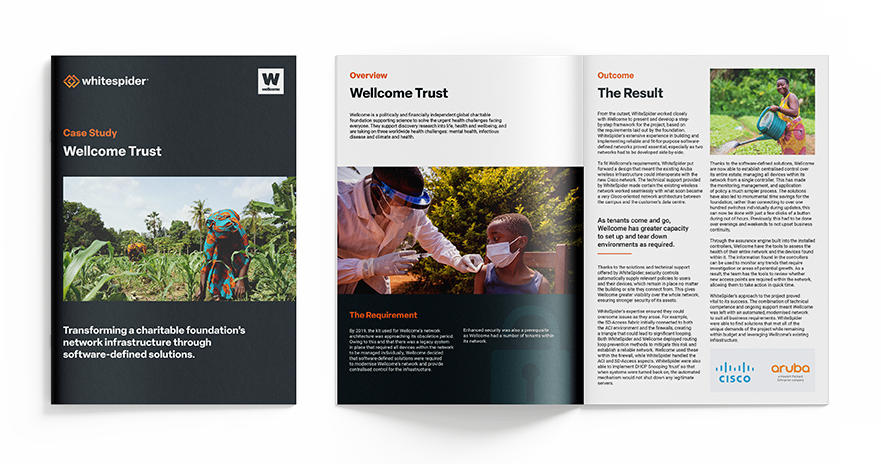
How we helped Wellcome modernise securely with Software-Defined infrastructure
Chris Dennehy
Network Manager, Wellcome

Why identity-driven secure access can’t wait
How Zero Trust strengthens Identity & Access Management (IAM)
The threat landscape has fundamentally changed and continues to evolve at pace. Attackers are no longer limited by time, scale, or resources. With the rise of AI-driven cybercrime, malicious actors can now automate attacks, generate convincing phishing campaigns, and continuously probe for vulnerabilities – 24/7.
AI doesn’t sleep. It doesn’t slow down. And it significantly lowers the barrier to launching sophisticated attacks.
AI-generated phishing attacks are increasing in volume and realism
Credential theft and identity-based attacks are now the primary breach method
Automated attack tools can exploit vulnerabilities faster than traditional defences can respond
This shift has made traditional, perimeter-based security models ineffective. Modern secure access must be built around identity, where every user, device, and session is continuously validated. Zero Trust strengthens Identity & Access Management (IAM) by enforcing this principle at every access point. Instead of relying on one-time authentication or network location, it ensures access decisions are dynamic, context-aware, and continuously assessed based on risk.
For organisations yet to adopt this approach, the challenge is no longer if, but how quickly they can align secure access with a Zero Trust, identity-first model.
With the increasing malicious use of AI, we expect both the volume and sophistication of attacks to continue growing. AI doesn’t sleep, which significantly increases the level of threat and exposure organisations face. As a result, we’re hearing from clients that they want a more pre-emptive approach to secure access, something we’ve intentionally built into our managed service tooling at WhiteSpider.

Phil Lees
CEO, WhiteSpider

How we helped a healthcare trust secure access with ZTNA and MFA
A leading NHS Trust needed to protect sensitive patient data while enabling clinicians to securely access systems across wards, clinics, and remote environments.
Their existing access model relied heavily on perimeter-based controls, creating gaps in visibility and increasing exposure to credential-based attacks.
We implemented Multi-Factor Authentication (MFA) alongside Zero Trust Network Access (ZTNA), ensuring every user and device was continuously verified before accessing critical systems. Access policies were aligned to roles, limiting unnecessary exposure and reducing lateral movement risk.
Outcome:
AI-generated phishing attacks are increasing in volume and realism
Strengthened compliance with NHS and GDPR requirements
Enabled fast, secure access for clinicians without impacting workflows
This approach ensured security improvements directly supported patient care, without adding friction for users.


IAM management solutions: Strengthen and scale secure access across your organisation
Secure access isn’t just about controlling who gets in; it’s about enabling your organisation to operate securely, efficiently, and at scale.
From onboarding users quickly to governing AI tool usage and managing access risk, a modern identity access strategy underpins both security and productivity.
Our multi-domain, vendor-agnostic architects and engineers design, configure, and operate secure access solutions tailored to your environment, helping you confidently support hybrid work, protect critical assets, and maintain control across increasingly complex infrastructures.
IAM frequently asked questions
General Questions
What is Identity Access Management (IAM)?
Identity and Access Management (IAM) is a framework of policies, technology and processes that ensures that business users have secure, appropriate access to their systems, apps and data. It is used to manage user identities, authentication and permissions, while keeping an organisation safe.
What is Secure Network Access?
Secure Network Access enhances user security, simplifies network access management, and improves the user experience, regardless of whether access is from the cloud, on-premises, or remotely. Solutions can include No-Touch VPN as a Service (VPNaaS), Zero Trust Network Access (ZTNA), and Firewall as a Service (FWaaS).
Why is Secure Network Access important?
Secure Network Access is essential for businesses of all sizes, offering protection and flexibility whether you’re a small startup or a large, multi-site organisation. For small businesses, it safeguards customer data and critical assets, reducing the risk of costly breaches and downtime. Larger organisations also benefit from streamlined access across multiple sites, allowing secure and efficient entry for employees and contractors while ensuring sensitive areas remain protected.
Secure Network Access isn’t just about security—it’s about enabling smooth, compliant operations. With a zero-trust approach, every access request is verified, keeping digital and physical environments safe, efficient, and agile.
What are the types of Access Management?
There are several types of Access Management, each designed to control and restrict user access to systems, apps and data. Role-Based Access Control (RBAC) assigns permission based on a user’s role, meaning they only have access to what is necessary to carry out their job. RuBAC allows access based on rules such as time of day or location.
Mandatory Access Control (MAC) is generally used in high security environments when access is centrally controlled, and users cannot modify permissions. Discretionary Access Control (DAC) allows data owners to grant or restrict access to individual users. Attribute-Based Access Control (ABAC) is dynamic and can provides access based on attributes such as device type or user identity. Each Access Management type is designed to solve specific security needs, and help organisations protect sensitive and confidential data.
What is ZTNA?
Zero Trust Network Access (ZTNA) is a security model that enforces strict verification of users and devices before granting access to applications, regardless of their location. It continuously verifies identity and device health while applying least privilege access. ZTNA enhances security by isolating resources and reducing reliance on traditional perimeter defences.
What is the difference between SSE and SASE?
Secure Access Service Edge (SASE) is a cloud-based framework that brings together networking and security services to ensure secure connectivity across various environments. By combining technologies such as Software-Defined Wide Area Networking (SD-WAN), Secure Web Gateways (SWG), Cloud Access Security Brokers (CASB), and Zero Trust Network Access (ZTNA), SASE enhances network performance, security posture and improves the overall user experience.
Security Services Edge (SSE) is focuses on cloud-centric security services and functions. It safeguards access to applications and data for remote users, without the networking optimisation focus included in SASE. SSE integrates security features like ZTNA, SWG, CASB, and Firewall as a Service (FWaaS) to provide robust protection in cloud environments.
To summarise, SASE delivers an all-in-one solution that tackles both connectivity and security requirements. Meanwhile, SSE focuses on providing specific security measures aimed at safeguarding users and resources in a cloud-centric environment.
Sales Questions
How can I contact you?
Have questions? Reach out to us by using the form in the top-right corner of our menu. Share as much detail as you’d like, and a member of our team will get back to you promptly.