
Let me start with the positives, because there were plenty.
The water-cooled Nexus switches were genuinely cool, pun fully intended, and the G300 is a monster, with crazy numbers (1.6 Tbps, around 70% better energy efficiency), seriously bonkers. One of the stats I read was that AI agents are now generating something like 450% more network traffic than humans doing the same task. If that trend continues, the network has every chance of becoming the bottleneck again, and Cisco are clearly leaning into that reality.
I spent a lot of time looking at their OT strategy and direction. There’s some excellently thought-out fanless hardware with impressively diverse connectivity options. In water, transport and energy sectors, the idea of AgenticOps reaching into operational technology (OT) environments is genuinely thought-provoking, especially when viewed through the lens of sovereignty, resilience and regulatory compliance.
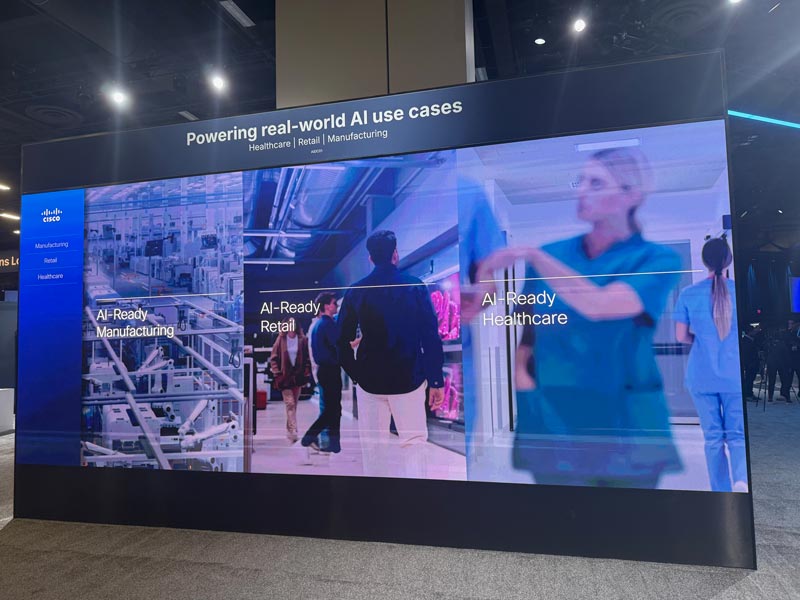
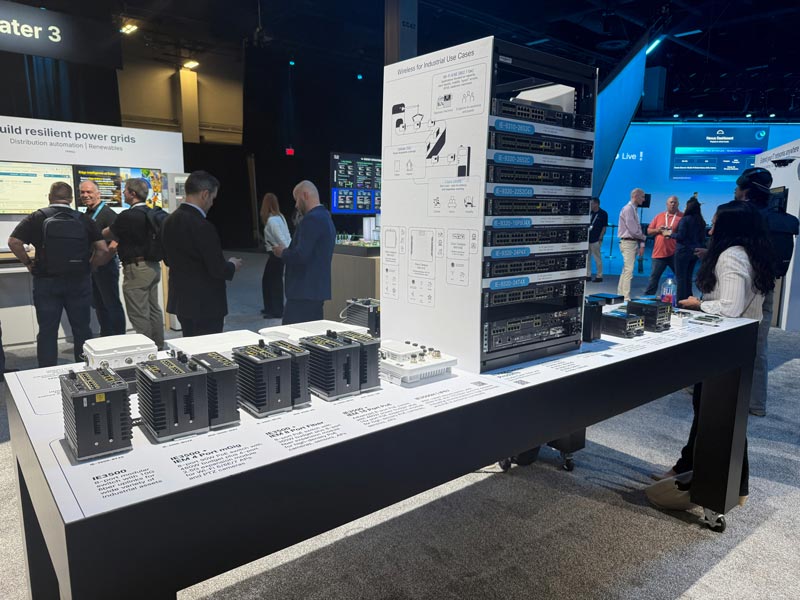
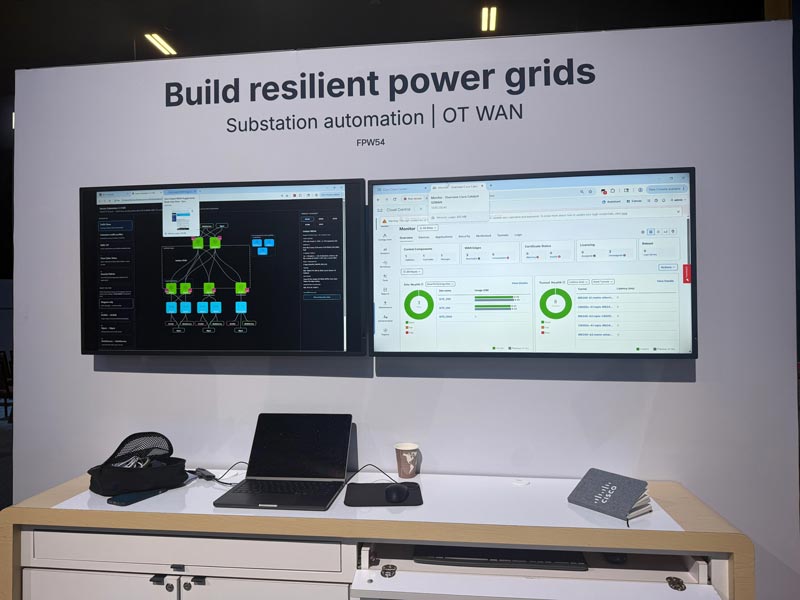
There were some genuinely interesting plays from both a hardware and software perspective. However, from an infrastructure standpoint, it sometimes felt as though the broader narrative was competing for airtime with the much louder AI story. That’s not to say infrastructure was absent, but compared with previous years, it felt less central to the overall event narrative.
Having been to Cisco Live (and Networkers before it) for 26 years, it has always been a brilliantly produced marketing event, and this year, as per previous years, the marketing was on point. But as is often the case with major technology announcements, conversations with product managers and specialists provided additional nuance around what is vision, what is roadmap, and what is available today.
Every product had an AI assistant. Every workflow had an AI agent. Every deck had AI somewhere in the title.
That’s not a criticism so much as an observation about where the whole industry is, but it did mean the substance occasionally got lost in the messaging, and it required a fair bit of poking and prodding to get under the hood of what functionality is here right now.
Cloud Control: A single operational plane
The big announcement was Cloud Control: a single operational plane spanning networking, security, compute, observability and collaboration. I love the vision (with some caveats described below), and it’s currently in controlled availability, global rollout not until July (with limited functionality), it’s exactly where operations should be heading – but it has a long way to go with Cisco’s own product managers openly describing it as a journey rather than a destination.
I struggle to see many organisations placing production-critical infrastructure under it just yet, not only because of platform maturity, but also because, well, not every organisation has the budget, operational capacity, in-house skills, or appetite for the kind of transformation needed to realise that vision. Definitely the direction is compelling; the maturity and broad applicability are still catching up.
When innovation outpaces integration
An unexpected observation, though, wasn’t what was on stage; it was what wasn’t.
For an event of this scale, I expected a more coherent infrastructure strategy tying everything together. There were plenty of interesting pieces in the World of Solutions, the new platforms, the cool switches, and some genuinely innovative OT thinking. But the connective tissue, the “here is how all of this works together in a real enterprise,” felt less defined than I expected. The spotlight has shifted so heavily toward AI agents, AI operations and AI factories that the broader infrastructure narrative felt secondary.
The point I keep coming back to is structural.
Almost every solution on show ultimately depends on being able to operate across diverse environments, yet the pitch often assumes a Cisco-centric world. Our customers don’t live in that world. They run Cisco and Fortinet and HPE and Arista and Microsoft and AWS and VMware and Nutanix and Palo Alto Networks and … (you get my point), alongside dozens of bespoke applications, all while managing sovereignty, governance and compliance obligations that aren’t going anywhere. So, the question is a fair one:
Can a single vendor genuinely own orchestration across full-stack, multi-vendor infrastructure? Or does a no-lock-in approach simply better reflect enterprise reality?
I know where I land on that.
AI won’t kill expertise. It will redefine it.
As an aging ex-techie (26-year CCIE), there’s a sad irony to this whole AI philosophy. Cisco’s whole thesis is eradicating complexity (rightly so, you may say), so organisations no longer need armies of expensive specialists to deploy and run it. They’ve even started embedding an AI assistant directly into the CCIE lab (I’m not joking). So, only half joking here: will the CCIE mean the same thing in three to five years?
My honest read is that expertise shifts rather than disappears: less “configure the box,” more “govern the agents, validate the decisions, and understand the blast radius when automation gets it wrong.” But the demand curve for traditional expert services is clearly bending, and anyone in this industry pretending otherwise isn’t paying attention.
That said, this isn’t fearmongering, and it certainly isn’t a reason to cancel your lab exam. The reality is that this transition will take time. Extensive technical expertise still matters enormously. AI may accelerate operations, but someone still needs to understand architecture, validate outcomes, manage risk and, when needed, do the bug scrubbing when the shiny new ‘Deploy’ button decides to brick half the infrastructure.
The destination Cisco painted is compelling. Clearly, they see significant market demand for a single-vendor, full-stack infrastructure orchestration and observability ecosystem. And to be fair, the engineering will continue to mature.
I just wish the marketing narrative and the engineering maturity were a little closer together, not because the vision is wrong, but because customers benefit most when expectation and reality are tightly aligned.
AI will absolutely transform IT operations; that part isn’t in doubt. The real question is whether we build open, governed, interoperable ecosystems around it, or quietly manufacture the next generation of vendor lock-in.
At WhiteSpider, that question has shaped our own approach. Our Merlin platform is vendor-agnostic and sovereign by design: no lock-in, no single control plane you have to bet the entire estate on. Because the hard problem isn’t building yet another AI assistant. The hard problem is enabling AI to operate safely, transparently and compliantly across real-world, multi-vendor environments, where the regulator and the CISO, not the roadmap, ultimately define operational appetite.