
A week after attending Cisco Live, I found myself back in Las Vegas, this time at HPE Discover. Having spent the majority of my career in and around the Cisco space and having been to every Cisco Live and Networkers since 1999, attending an HPE event felt a little unfamiliar territory. I’ve been a CCIE for 26 years, WhiteSpider has delivered Cisco solutions for over a decade, and many of the people I consider friends in this industry come from the Cisco ecosystem. So, stepping into Discover offered a fresh perspective from outside the ecosystem I’ve known for much of my career.
Attending events like these isn’t about choosing one vendor over another. At WhiteSpider, we invest time in understanding how different vendors think, innovate, and shape the future of the industry because it helps us better guide our clients. Events like HPE Discover provide valuable insight into where the market is heading, how partner ecosystems are evolving, and where new opportunities or challenges may emerge.
For me, attending was an opportunity to better understand how HPE sees the future of infrastructure, and where that aligns with, differs from, or even challenges some of the thinking that came out of Cisco Live.
At WhiteSpider, infrastructure remains at the core of everything we do. We build networks, data centres, cloud platforms, security architectures, operational services and develop applications that sit on top of all of this. Understanding where the major vendors are heading isn’t optional; it’s part of our responsibility to our customers.
What struck me most during the week was not how different HPE and Cisco are, but how similar their destinations appear to be. Both organisations clearly and obviously see a future dominated by AI. Both are investing heavily in automation, operations, observability and simplification. Both are trying to help customers deal with environments that have become increasingly complex over the last decade. The destination appears remarkably similar.
The difference lies in the journey.
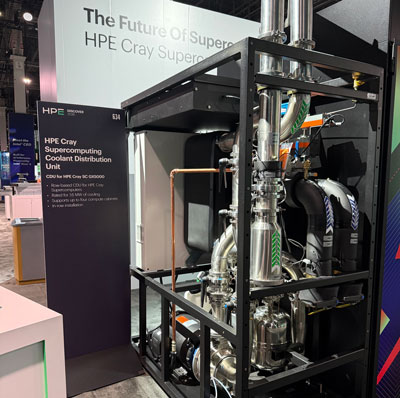
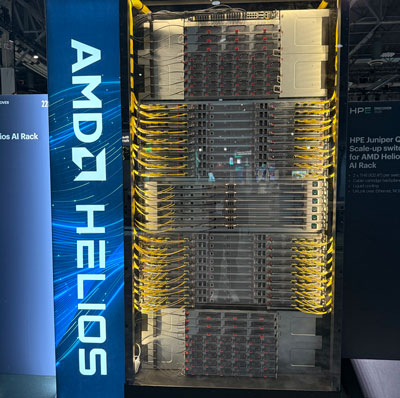
At Cisco Live, the conversation often felt centred around what AI will do. At HPE Discover, the conversation felt centred around what AI requires. That might sound like a subtle distinction, but I think it’s an important one.
Whilst Cisco spent a great deal of time discussing AI-enabled operations, AI assistants and AI-driven experiences, HPE seemed focused on the infrastructure necessary to make those outcomes possible. Compute, storage, networking, data, power, cooling, governance and security featured heavily throughout the event. Rather than presenting AI as the solution to every problem, HPE appeared to be asking a more practical question: how do organisations actually build the foundations required to adopt AI successfully?
As somebody who has spent most of his career designing and building infrastructure, I found that message resonated strongly.
The surprise wasn’t scale. It was alignment.
Perhaps the biggest surprise for me was the breadth of the HPE ecosystem. I arrived expecting servers, storage and networking, and given the Juniper acquisition and the attention surrounding Aruba, I assumed much of the event would focus on switches, wireless, network operations and MIST. Instead, I found myself moving between discussions on campus networking, private cloud, AI infrastructure, HPC environments, storage platforms, data management and quantum computing. The sheer scale of the portfolio was genuinely eye-opening.
It wasn’t simply the breadth of the portfolio that impressed me, it was how the various components fit together. The overarching message wasn’t about individual products. It was about creating an ecosystem capable of supporting everything from edge networking through to some of the most advanced computing environments on the planet.
One observation I kept returning to throughout the week was how closely many of the discussions aligned with the conversations we are already having with our customers.
At WhiteSpider, we spend a lot of time discussing sovereign AI use cases, regulated environments, governance, data residency and multi-vendor strategies. We work extensively within healthcare, NCI, and other regulated industries, where simply uploading sensitive data into a public AI service is neither acceptable nor practical.
The recurring theme at Discover seemed to acknowledge those realities. Rather than promoting a single destination or a single way of consuming technology, there appeared to be a recognition that different organisations have different requirements around control, governance, security and sovereignty, and not just pitching to the top 1% of global enterprises; it reflected the real-world complexity many organisations are navigating today.
That felt less like a challenge to our thinking and more like validation of it.
AI gets the headlines. Infrastructure makes it possible.
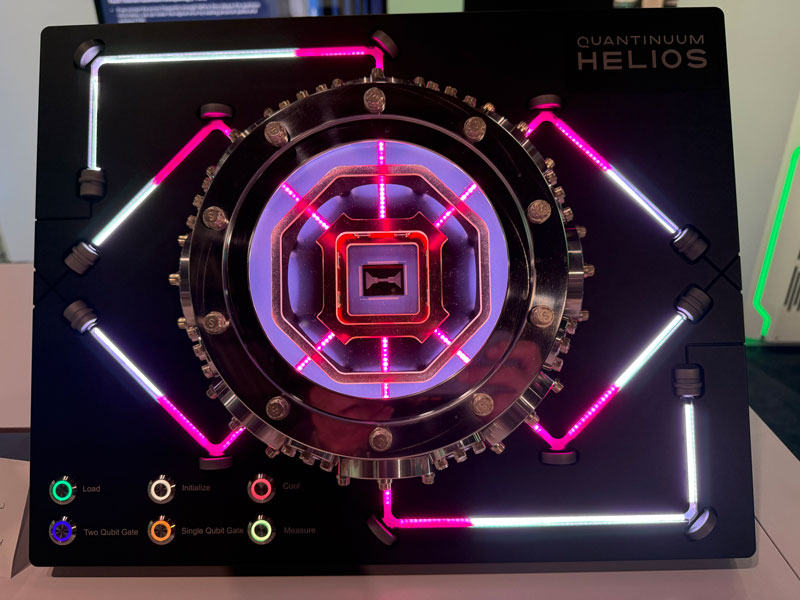
A key point of the week wasn’t a keynote announcement or a product launch. It happened whilst walking through the solution expo, where I came across a significant component of a quantum computing initiative.
I’ll leave the details deliberately vague, but what made me stop wasn’t the technology itself. It was a small card next to it, saying where it was manufactured and the realisation that the facility in which part of that technology had been brought to life relied upon infrastructure that WhiteSpider had designed, delivered and supported.
Standing thousands of miles from home, looking at technology that could help shape the future of computing, deepen our understanding of the universe, and contribute to life-changing medical advances, while knowing our team had played a small role in enabling the environment where it was created, was a genuinely proud moment.
As technologists, we move from project to project, often without pausing to consider what those projects ultimately enable. Occasionally, you get a glimpse of the bigger picture, and when you do, it serves as a powerful reminder of why we do what we do.
Leaving the event, I wasn’t thinking about whether HPE is better than Cisco or vice versa. That was never the point. In many ways, I think that’s the wrong question entirely. What I took away was a deeper appreciation for the role infrastructure continues to play in an industry currently obsessed with AI. Whilst the headlines may focus on models, agents and automation, none of those things exists without the networks, storage platforms, compute resources and operational foundations that sit underneath them.
For all the excitement surrounding AI, infrastructure still matters. In fact, I’d argue it matters more than ever. And for someone who still gets excited about infrastructure after more than three decades in this industry, that was reassuring to see.